Wondering why so many Franklin Lakes homes feel grand, private, and distinct, even when they do not all fit one architectural label? That is because the borough’s estate market is shaped by both history and land. If you are buying, selling, or updating a home here, understanding the local style vocabulary can help you better evaluate curb appeal, layout, and long-term fit. Let’s dive in.
Franklin Lakes Architecture Starts With the Land
In Franklin Lakes, architecture is not just about the front elevation. It is also about lot size, setbacks, tree canopy, and the way a home sits on the property. The borough’s residential districts range from 22,500-square-foot lots to multiple-acre parcels, and that zoning framework helps preserve the estate character many buyers associate with the area.
The borough’s history also matters. Franklin Lakes began as a Dutch farming settlement, and early homes were often built with sandstone and fieldstone. Today, 14 historic homes still stand, offering a visible link between the borough’s agricultural roots and its current mix of estate houses, luxury resales, and newer construction.
That is why the best way to think about Franklin Lakes architecture is as a spectrum. At one end, you have historic vernacular stone farmhouses. At the other, you have modern farmhouse, center-hall colonial, contemporary, Tudor-inspired, and European-style estates that reflect today’s luxury market.
Why Estate Homes Look the Way They Do
Franklin Lakes is known for detached single-family homes, wooded privacy, and large residential lots. The borough’s 2021 master plan reexamination notes that its five single-family districts are mainly distinguished by lot size and are largely fully developed. It also found that physical appearance of neighborhoods was a major reason many respondents said families choose Franklin Lakes.
In practical terms, that means exterior style and site planning often work together. A house may have formal symmetry and classic millwork at the front, but the real value may also come from a long setback, mature trees, a rear entertaining terrace, or a pool area that feels tucked into the landscape.
For buyers, this helps explain why two homes with similar square footage can feel very different. For sellers, it shows why presentation should go beyond the façade and include the full setting, from driveway approach to outdoor living areas.
Colonial Styles In Franklin Lakes
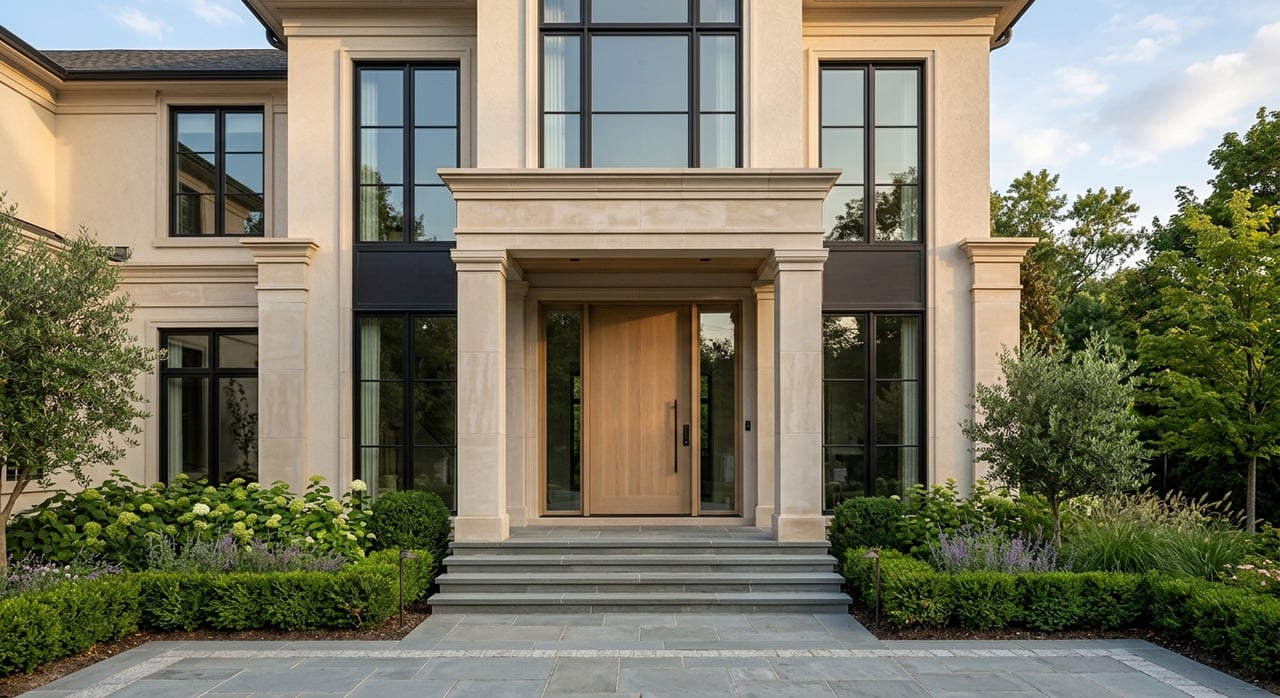
Traditional colonials are among the clearest and most familiar style families in Franklin Lakes. Many local listings use terms like center-hall colonial, classic colonial, or colonial manor to describe homes with formal street presence and a balanced exterior composition.
According to the National Park Service’s description of Colonial Revival architecture, common features include symmetry, gabled or hipped roofs, double-hung windows, fan or Palladian windows, pilasters, and pronounced front porches. In the Franklin Lakes market, that language often appears in larger homes with updated interiors designed for modern living.
What To Look For In Colonial Homes
If you are touring colonials in Franklin Lakes, you will often notice a few recurring features:
- Symmetrical front façades
- A defined center hall or formal entry sequence
- Gable or hipped rooflines
- Evenly spaced fenestration, often with double-hung windows
- Traditional millwork and formal room layout cues
- Newer interiors with larger kitchens, family rooms, and primary suites
Many of today’s colonials blend classic curb appeal with more flexible interiors. You may still see formal living and dining rooms, but they are often paired with open kitchens, bonus suites, home offices, and expanded family spaces.
Modern Farmhouse In Franklin Lakes
Modern farmhouse has become a popular hybrid style in the local luxury market. In Franklin Lakes, this look often combines traditional massing with cleaner finishes and more contemporary interior planning.
Recent local listings described homes with white or light exteriors, vertical siding, black-trim windows, gable roofs, vaulted ceilings, and exposed beams. You may also see board-and-batten details, open layouts, and a stronger connection between indoor gathering spaces and outdoor entertaining areas.
Why Buyers Respond To This Style
Modern farmhouse tends to appeal to buyers who want warmth without heavy ornament. The exterior can still feel timeless, but the overall effect is fresher and more relaxed than a more formal manor-style home.
In Franklin Lakes, this style also fits well with the broader estate setting. On a large wooded lot, a modern farmhouse can feel polished but not overly rigid, especially when paired with stone accents, wide driveways, and layered outdoor spaces.
Contemporary Homes In Franklin Lakes
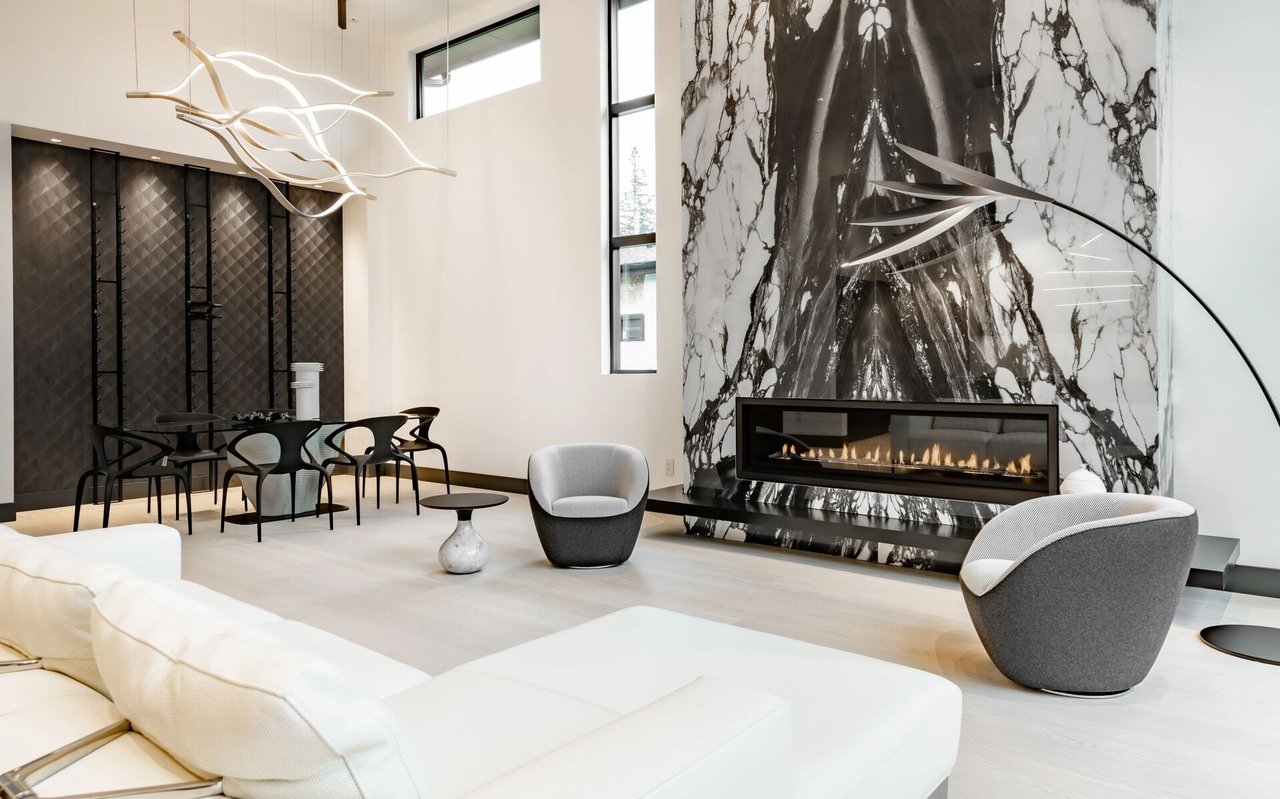
Contemporary homes stand apart from historical revival styles by emphasizing glass, openness, and indoor-outdoor flow. In Franklin Lakes, recent listings have described contemporaries with soaring ceilings, skylights, expansive windows, and architect-driven layouts on large sites.
This style usually has a more streamlined visual language. Instead of leaning on formal symmetry or traditional detailing, contemporary homes often focus on volume, light, and connection to the property itself.
Key Traits Of Contemporary Estates
You may see these features in Franklin Lakes contemporary homes:
- Clean lines and simpler exterior forms
- Large or floor-to-ceiling windows
- Dramatic ceilings and open entertaining spaces
- Strong natural light throughout the home
- More direct visual connection to patios, lawns, or pool areas
For some buyers, this style feels especially well suited to estate living because it captures views, sunlight, and privacy in a very direct way. For others, it offers a useful contrast to the more traditional homes that also define the borough.
Tudor-Inspired And European Estate Labels
Tudor-style and European-inspired labels also appear in Franklin Lakes, though they are often used more loosely in the luxury market. A Tudor-inspired exterior may include steep rooflines, complex gables, prominent chimneys, brick or stone, and grouped windows.
In many cases, the exterior references a historic style while the interior has been fully updated. That means you may walk into a home with a stately, old-world façade and find a contemporary kitchen, open family spaces, and modernized finishes.
French Chateau and Hampton-style are two other labels that show up in local listings. In Franklin Lakes, these terms often serve as market shorthand for larger luxury homes with formal proportions, substantial masonry, grand entries, libraries, and amenity-rich grounds rather than strict historical reproductions.
The Historic Stone Farmhouse Legacy
If you want to understand the roots of Franklin Lakes architecture, look to the borough’s historic homes. Early sandstone and fieldstone farmhouses, along with vernacular houses featuring clapboard, Dutch doors, stone walls, and gable roofs, help explain the material palette and massing that still feel natural here.
These historic homes matter even if you are shopping for a newer estate. They establish a local architectural memory. Stone façades, grounded proportions, and homes that appear connected to the land all echo that earlier building tradition.
The borough’s historic-home materials also note that some of these properties evolved over time from farmhouses into more modern suburban dwellings. That pattern still offers a useful model for thoughtful renovation today.
How Layout Has Evolved In Local Estates
While architecture shapes first impressions, layout often determines whether a home works for the way you live. In Franklin Lakes, recent listings across several style categories consistently highlight spaces such as home offices, media rooms, bonus suites, butler’s pantries, open kitchens, and large primary suites.
That tells you something important about the current market. Buyers still value classic curb appeal, but they also want everyday livability, flexible work-from-home options, and spaces that support both quiet privacy and entertaining.
A colonial may keep its formal center-hall structure while opening the rear of the home into a large kitchen and family room. A Tudor-style house may preserve its exterior identity while introducing a cleaner, more current interior. A contemporary may offer the most openness from the start, but still rely on the same estate essentials: privacy, flow, and usable outdoor space.
Renovation Considerations In Franklin Lakes
If you are planning to update or expand a home, style is only part of the decision. In Franklin Lakes, local regulations and site conditions can shape what is practical.
The borough’s area-and-bulk standards affect building footprint, setbacks, detached structures, pools, and additions. This can be especially important in older A-22.5 neighborhoods, where the 2021 master plan reexamination notes that some lots have limited room for additions without variance relief.
Septic planning is another major factor. Franklin Lakes states that bedroom count determines septic design volume, cesspools must be replaced at sale, and septic repairs require permits. That means layout changes that add bedrooms or change use patterns may involve more than interior design decisions.
Tree preservation also plays a visible role in the character of the borough. Franklin Lakes adopted tree-removal amendments designed to better preserve canopy, and that matters because mature landscaping is part of what gives many estate properties their privacy and visual appeal.
Smart Questions To Ask Before Renovating
Before you move forward with an addition or major redesign, it helps to ask:
- How much buildable area remains under current setback and coverage rules?
- Would a new bedroom affect septic design requirements?
- Are there mature trees or site features that limit placement?
- Can an addition be placed behind the original street-facing mass for a more natural result?
- Does the renovation preserve the home’s strongest architectural identity?
For historic homes especially, the borough’s examples suggest a practical approach. Keeping the original front mass intact and placing newer wings or connectors toward the rear often creates a more sympathetic finished product.
What This Means If You Are Buying Or Selling
If you are buying in Franklin Lakes, style labels are helpful, but they should not be the only lens you use. Two homes may both be called colonial, modern farmhouse, or contemporary, yet offer very different site planning, privacy, renovation potential, and day-to-day function.
If you are selling, understanding your home’s style family can improve how it is positioned. The right description should reflect both the architecture and the way the home lives, whether that means formal symmetry, indoor-outdoor flow, historical character, or a blend of traditional exterior cues with updated interiors.
In a market like Franklin Lakes, buyers are often responding to the full package. Architecture matters, but so do lot presence, canopy, layout flexibility, and the overall sense of estate living.
When you understand how those elements work together, you can make more confident real estate decisions. For tailored guidance on buying, selling, or positioning an estate home in Franklin Lakes, connect with The Tony Nabhan Collective.
FAQs
What architectural styles are most common in Franklin Lakes estate homes?
- Franklin Lakes estate homes commonly include center-hall colonials, colonial manors, modern farmhouses, contemporaries, Tudor-inspired homes, European-style estates, and some historic stone farmhouses.
How does Franklin Lakes history influence local home architecture?
- The borough’s Dutch farming history and early sandstone and fieldstone homes still shape the local architectural vocabulary, especially in the use of grounded materials, gable forms, and homes that feel connected to the land.
What does “center-hall colonial” usually mean in Franklin Lakes?
- In Franklin Lakes, a center-hall colonial usually refers to a home with a formal, symmetrical façade and a central entry layout, often paired with updated interiors that include larger kitchens, family rooms, and modern suite spaces.
Why does lot size matter for Franklin Lakes estate design?
- Lot size matters because Franklin Lakes zoning districts are largely defined by parcel size, and those standards influence setbacks, coverage, additions, detached structures, and the overall estate feel of a property.
What should Franklin Lakes buyers know about renovating an estate home?
- Buyers should pay close attention to zoning limits, setback and coverage rules, septic requirements tied to bedroom count, and tree-preservation considerations before planning additions or major layout changes.
Are historic homes in Franklin Lakes renovated differently from newer homes?
- Historic homes are often updated by preserving the original street-facing mass and placing newer additions or connectors toward the rear, which can help maintain architectural character while improving function.