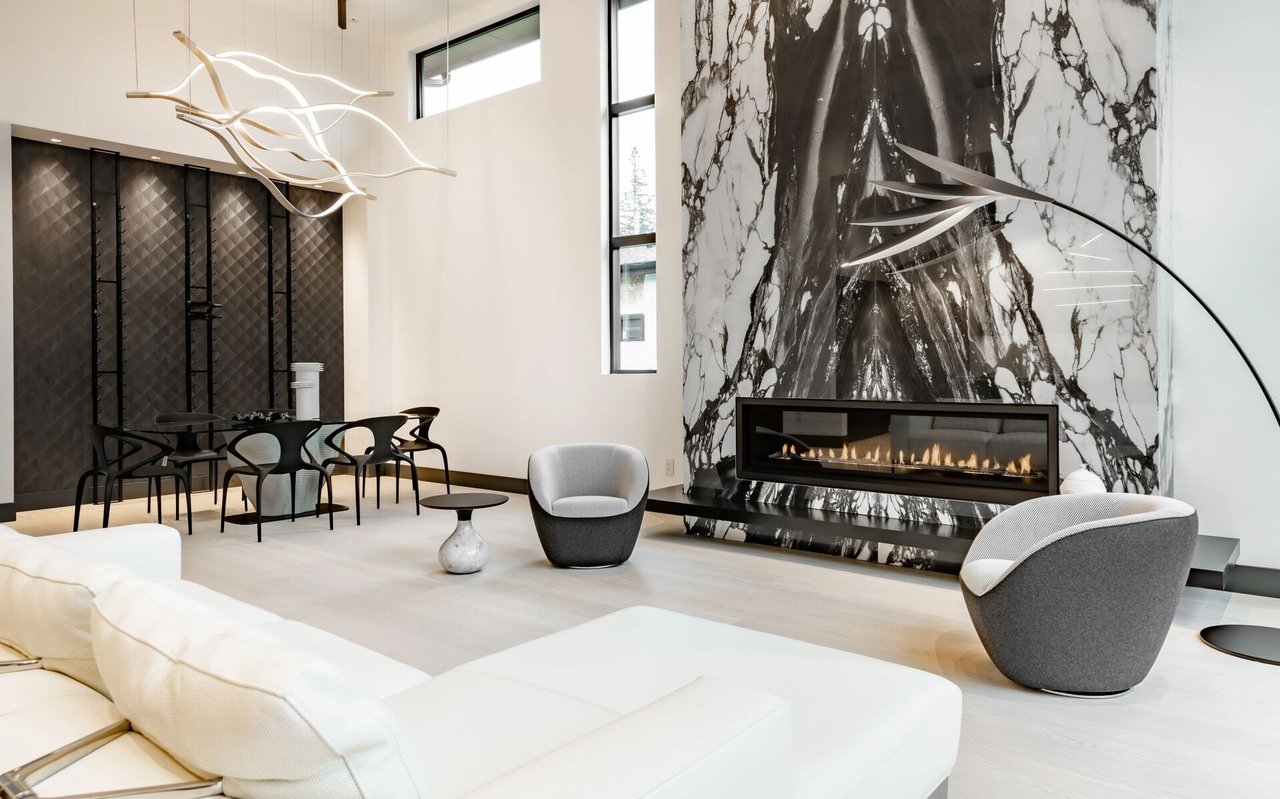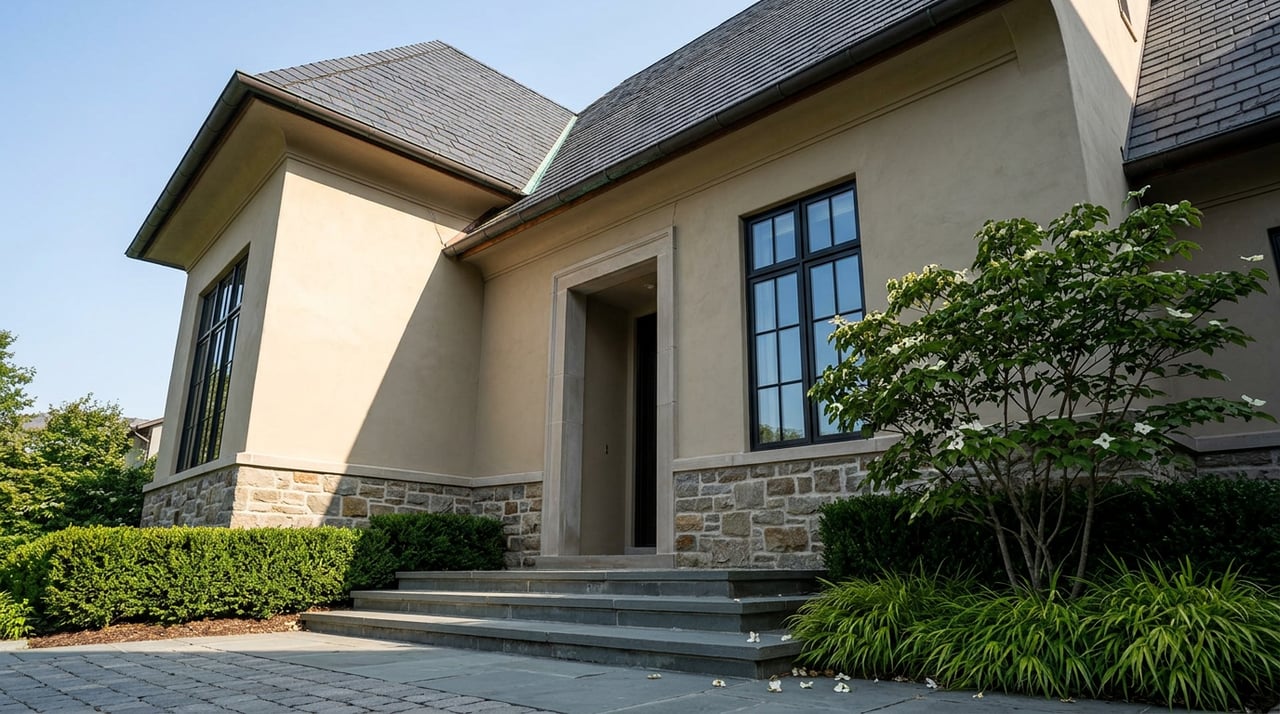
Architecture critic Carter Horsley once described One Park, the newest tower on the Cliffside Park skyline, as "a very striking and very modern cliff-top aerie." He was right about the aerie part. Every building on this stretch of the Palisades sits on the same cliff and looks out at the same Manhattan skyline. What Horsley's line leaves out is that two buyers looking at that exact view, from two different buildings a few blocks apart, are paying wildly different prices for it.
That gap is the thing worth understanding before you start comparing listings against the borough's median price. The median in Cliffside Park is not describing one market. It is averaging two of them.
The Two Buildings on the Same Cliff
Walk the ridge above the Hudson and you will pass Winston Towers, the twin 30-plus-story buildings at 200 and 300 Winston Drive, completed in 1973 and 1974. Keep walking and you reach One Park, at 320 Adolphus Avenue, a 14-story tower with 204 residences finished in 2019. Both buildings sell the same thing: a high floor, a wall of glass, and the George Washington Bridge on one side and the Manhattan skyline on the other.
They do not sell it at the same price per square foot.
| Building | Completed | Units | Entry-level size | Sale price range | Approx. price per sq ft |
|---|---|---|---|---|---|
| Winston Towers (200 & 300 Winston Drive) | 1973-1974 | 640 and 676 | 962 sq ft one-bedroom | roughly $305,000-$435,000 | roughly $317-$452 |
| One Park (320 Adolphus Ave) | 2019 | 204 | roughly 750-800 sq ft one-bedroom | $600,000 up to $4,345,000 for a four-bedroom penthouse | roughly $770 and climbing with size and floor |
Run the math on the smallest unit in each building and the newer tower is asking somewhere around 70 percent more per square foot than the older ones, for a comparable one-bedroom layout facing the same river. That is not a rounding difference. It is two separate pricing systems operating a few blocks apart, and it is the reason a single median number for Cliffside Park tells you almost nothing about what your specific budget will buy.
What the Older Towers Are Actually Selling
Winston Towers 300 was built on the site of the old Palisades Amusement Park, which entertained visitors from 1898 until it closed in 1971. The tower that replaced it is not glamorous by design. It is a straightforward, grid-faced high-rise, and one recently sold unit there carried a monthly maintenance charge of $671, a fee that according to the listing bundled in common area upkeep, a 24-hour doorman, the fitness room, hot water, and access to the pool and tennis courts.
That number matters because it is close to an all-in figure. Heat, water, staffing, and recreational amenities are folded into one flat monthly line that has not needed to change dramatically since the building opened. What buyers are purchasing at Winston Towers is square footage and a fixed, predictable carrying cost in a building whose systems are more than fifty years old.
What the New Tower Is Actually Selling
One Park is not competing on square footage. It is competing on the amenity list: a heated indoor pool and spa, a rooftop lounge with fire pits and grilling stations, a golf simulator, a private theater and media rooms, a pet spa, co-working space, and mechanical parking with EV charging, all backed by 24/7 concierge and doorman service. None of that comes free. A building that runs a golf simulator and a rooftop lounge is carrying operating costs that a 1970s tower with a tennis court and a laundry room on every floor simply does not have.
That is the honest explanation for the per-square-foot gap. It is not that the newer building is overpriced or that the older one is underpriced. It is that the two towers are selling different products that happen to share a zip code and a view corridor. One sells space at a fixed, known cost. The other sells a resort experience at a premium that reflects the cost of running one.
What This Means If You're Comparing Anything Against the Median
As of mid-August 2026, the median list price for a Cliffside Park condo sat at roughly $528,000, with units typically spending around 66 days on the market before going under contract. Pull back to the full housing stock, including the borough's colonials, duplexes, and multi-family properties, and the median list price as of mid-September 2026 climbs to roughly $687,000.
Neither number tells you what a specific unit in a specific building will cost. A buyer anchored to the $528,000 condo median who walks into One Park expecting anything close to that figure will be looking at a studio or the smallest possible layout, if that. A buyer who assumes every unit on the cliff carries a Winston Towers-style flat maintenance fee will be surprised by what a newer building's amenity package actually costs to run month to month.
The useful question is never "what's the median in Cliffside Park." It is "what vintage of building am I actually looking at, and what does that vintage's fee structure include." Those two facts, more than the address, determine what you are really paying for.
Before You Write an Offer on Either Kind of Building
A few things worth checking before you commit, regardless of which era of tower you are drawn to:
- Ask for the building's reserve study, not just the current monthly fee. A low fee in an older tower can mean a special assessment is coming for roof work, elevator modernization, or facade repairs.
- Read exactly what the maintenance charge includes. "All-inclusive" fees in older buildings can bundle in utilities and staffing that a newer building bills separately, which changes the real monthly comparison.
- Confirm the building's rental and pet policies before you fall in love with a unit. Investment buyers in particular should verify owner-occupancy ratios and any restrictions on short-term leasing.
- If you're weighing a legacy tower against new construction, price the two on a true cost-per-square-foot basis including the monthly fee, not just the sticker price. A cheaper purchase price with a high monthly carrying cost can cost more over five years than the reverse.
None of this is unique to Cliffside Park. It is unique to any market where a fifty-year age gap sits between buildings on the same block, which describes this stretch of the Palisades better than it describes most of Bergen County.
Frequently Asked Questions
Does this price split only apply to Cliffside Park's high-rises, or does it show up in the wider housing stock too? The clearest version of the gap is between the 1970s towers and One Park, because both are large multi-unit buildings with public pricing history. The borough's broader stock of colonials, duplexes, and multi-family homes trades in its own range entirely, which is part of why the all-property median runs meaningfully higher than the condo-only median.
Is a unit in a legacy tower automatically the better value because the price per square foot is lower? Not automatically. A lower purchase price can come with a building closer to needing a capital project like roof or elevator work, and a buyer should weigh that risk against the flat, amenity-inclusive monthly fee those buildings tend to offer. The math only works in your favor if you've actually seen the reserve fund numbers.
Are there other new-construction buildings in Cliffside Park priced like One Park, or is it the exception? One Park is the borough's clearest example of ground-up luxury construction completed in the past several years, and it is the reference point for comparing new-build pricing against the older high-rise stock along the ridge.
If you are weighing a unit against the wrong number, or trying to figure out what a specific building's fee structure actually means for your monthly budget, that is exactly the kind of question the Tony Nabhan Collective is built to answer. Request your free home valuation and get a read on where your specific property, or your specific target building, actually sits against this market.