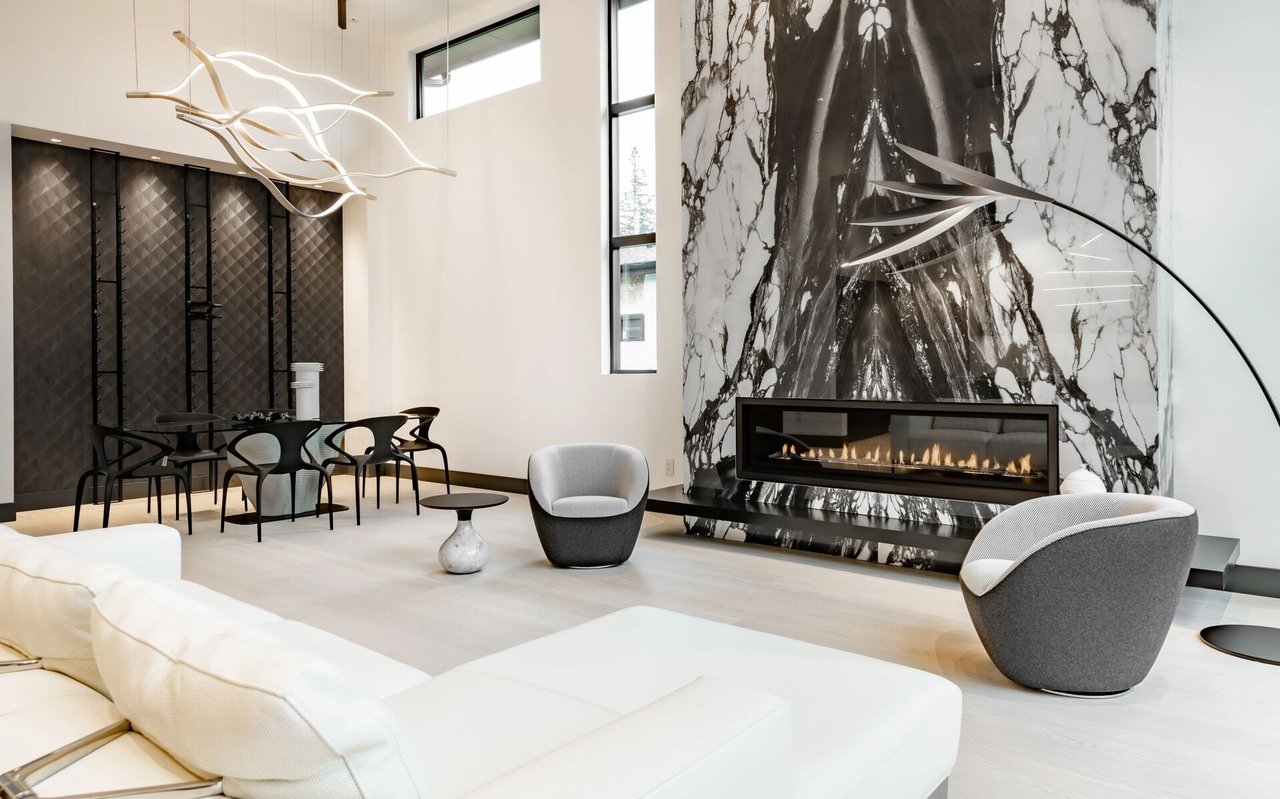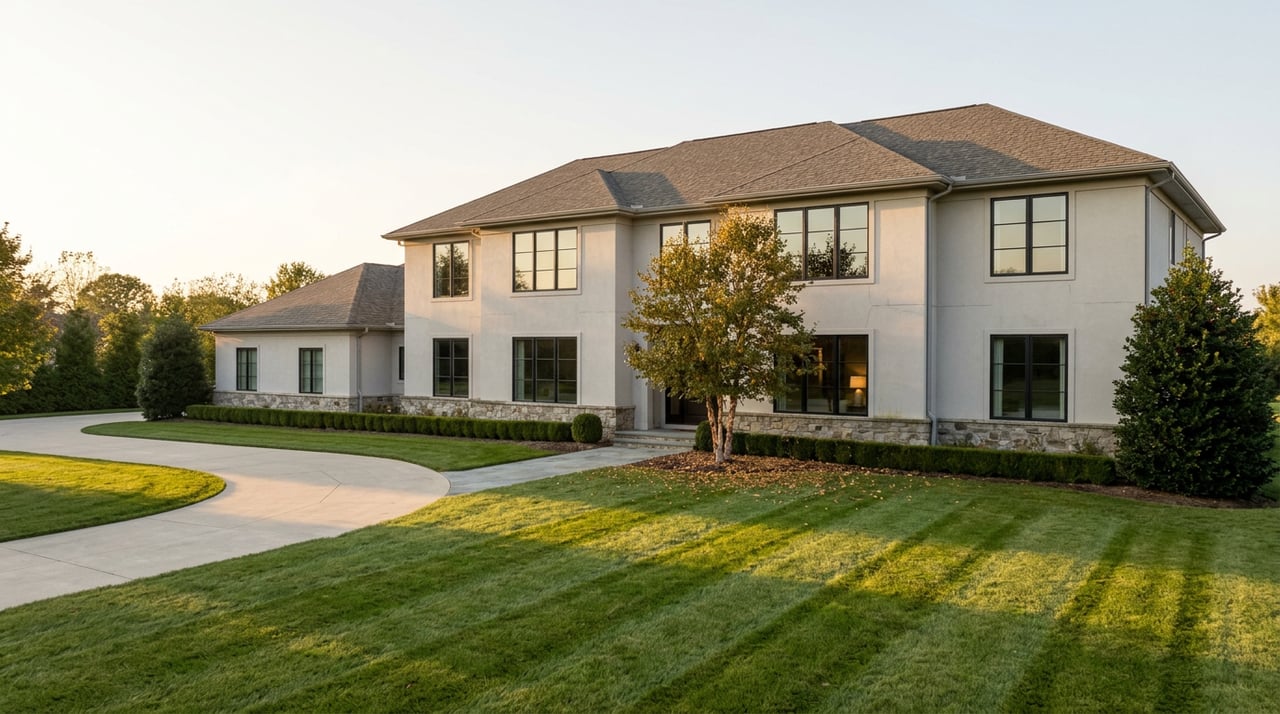
Picture two estate listings in Upper Saddle River going under contract in the same week. Same price band, same acre-plus lot size, same buyer profile: a relocating family with an attorney and an inspector already lined up. One could close in five weeks. The other could stall past three months, not because the house had problems, but because of what was connected to it underground.
That gap is not unusual in this borough, and it has nothing to do with square footage or finish level. Upper Saddle River does not operate its own sewer treatment plant. Depending on where a house sits, its wastewater either flows into a neighboring town's system under a decades-old agreement, or it never leaves the property at all, treated on-site by a private well and septic setup that answers to a completely different set of rules. Which category a house falls into is not something a listing photo or a square-footage number will tell you. It is something a seller needs to know before the sign goes in the yard.
A Borough Wired Into Its Neighbors
Upper Saddle River's own sewer code lays this out plainly: some properties connect to Ramsey's sewer system, others connect to a combined system run jointly by Woodcliff Lake and Montvale, and the borough bills, monitors and enforces each side differently, because each system was negotiated under a separate interlocal agreement. A property connecting to the Woodcliff Lake and Montvale side owes a $4,500 connection fee that the borough collects and forwards. A property tied into the Ramsey system instead owes a $700 capacity charge, a figure that traces back to an agreement dated June 18, 1979 and still governs how new connections are billed today. Neither number appears on a comparable sales sheet. Both can affect what a seller needs to resolve before closing if the connection was never properly recorded.
Here is what that patchwork looks like in practice:
| System | Who sets the rules | What a seller should confirm before listing |
|---|---|---|
| Ramsey sewer | Ramsey's own sewer regulations, incorporated into Upper Saddle River's code by reference | Billing status and whether any capacity surcharge applies based on flow |
| Woodcliff Lake / Montvale combined sewer | Whichever town's rule is stricter where the two conflict | Status of the $4,500 connection charge and current borough billing |
| Private well and septic | State law plus Upper Saddle River's own Board of Health septic ordinance | Well test scheduled well ahead of closing, septic contractor licensed and available |
Many of the borough's largest properties fall into that third row. Upper Saddle River grew up on one-acre-and-larger lots, and public sewer lines never reached every corner of town. Seven-figure and eight-figure estates here are just as likely to run on private well and septic as they are to sit on municipal utilities, which means the infrastructure question is not a footnote for luxury sellers in this market. It is often the first thing to check.
Well and Septic Sales Run on a Separate Clock
If a house draws its water from a private well, New Jersey's Private Well Testing Act applies, and it has applied to every well-served property sale in the state since 2002. The law requires the raw, untreated water to be tested for up to 43 parameters by a certified lab, with results reviewed by both buyer and seller before the closing of title. The law does not block a sale if the water fails a standard. It simply requires that both sides know what they are dealing with before anyone signs. Testing itself typically runs in the neighborhood of $1,200 to $1,500 and needs to happen early enough that lab turnaround, and any negotiation over remediation, does not become the thing holding up closing.
Septic tells a similarly local story. Upper Saddle River's Board of Health licenses its own septic contractors, and the ordinance is specific: a $150 annual fee, a $30,000 surety bond posted with the borough, and a reciprocity provision that lets a contractor already licensed in Franklin Lakes or Oakland work in Upper Saddle River without retesting. Buried in the same chapter is a rule that matters more than it looks: whoever inspects a septic system as part of a resale is barred from also contracting to repair whatever they find wrong with it. That is a sound consumer protection. It also means that if an inspection turns up an issue, a seller needs a second, separate contractor to address it, which adds a step most first-time sellers do not budget time for.
None of this is exotic by New Jersey standards. The state's Department of Environmental Protection routinely recommends a septic inspection before any property transfer involving one, precisely because a failing system can turn into thousands of dollars in disposal-field repairs if it goes unnoticed. What is specific to Upper Saddle River is the paper trail: a named borough license, a bonded contractor, and a conflict-of-interest rule that only shows up in this town's own code.
Public Sewer Is Not the Simpler Path Either
It would be easy to assume that a house on Ramsey or Woodcliff Lake and Montvale sewer skips all of this. It skips the well test and the septic license, but it does not skip paperwork. Upper Saddle River's own construction code fee schedule charges $60 for a written clarification request on matters including the availability of sewers to a specific property. In a town where sewer service was built out piecemeal over decades through three separate agreements, confirming exactly which system serves a given address, and whether the connection was ever formally recorded, is often a formal request rather than a quick phone call.
Before You List, or Before You Write an Offer
The practical takeaway is the same whether you are preparing to sell or getting ready to make an offer on a property in this borough:
- Find out which category the house falls into first: Ramsey sewer, Woodcliff Lake and Montvale sewer, or private well and septic. This is not always obvious from a listing sheet.
- If it is well and septic, schedule the state-required water test well in advance of a target closing date, and confirm that any septic contractor involved carries a current Upper Saddle River license.
- If it is public sewer, request the borough's written clarification on sewer availability and connection history early, rather than discovering a gap in the record during attorney review.
- Treat infrastructure identification as the first item on a pre-listing checklist, not a detail that surfaces after a buyer's attorney starts asking questions.
Frequently Asked Questions
Who pays for the well water test in New Jersey, the buyer or the seller? The Private Well Testing Act does not assign payment by law. In practice, sellers commonly arrange and pay for the test since they are the party disclosing the water quality, though this is negotiable between buyer and seller like most other closing costs.
Can a home in Upper Saddle River still sell if the well test comes back with a failure? Yes. The law does not prohibit a sale based on water quality results. It requires that both parties review the results before closing so the outcome, whether that means remediation, a price adjustment, or moving forward as-is, is a negotiated decision rather than a surprise.
Is a septic inspection legally required to sell a home in Upper Saddle River? There is no single statewide law mandating a septic inspection at resale. But Upper Saddle River's own ordinance already assumes one happens, since it specifically regulates what a resale septic inspector can and cannot do. In practice, that makes inspection a standard part of a closing here even without one sentence of state law making it compulsory.
Selling or buying in a town this dependent on out-of-town infrastructure rewards preparation over speed. If you are weighing a listing in Upper Saddle River or comparing properties across its different utility zones, the Tony Nabhan Collective can walk through what your specific address is actually connected to well before it becomes a closing-week question. Request Your Free Home Valuation to start that conversation.